
"But a bird that stalks

down his narrow cage

can seldom see through

his bars of rage

his wings are clipped and

his feet are tied

so he opens his throat to sing.


The caged bird sings

with a fearful trill

of things unknown

but longed for still

and his tune is heard

on the distant hill

for the caged bird

sings of freedom.”
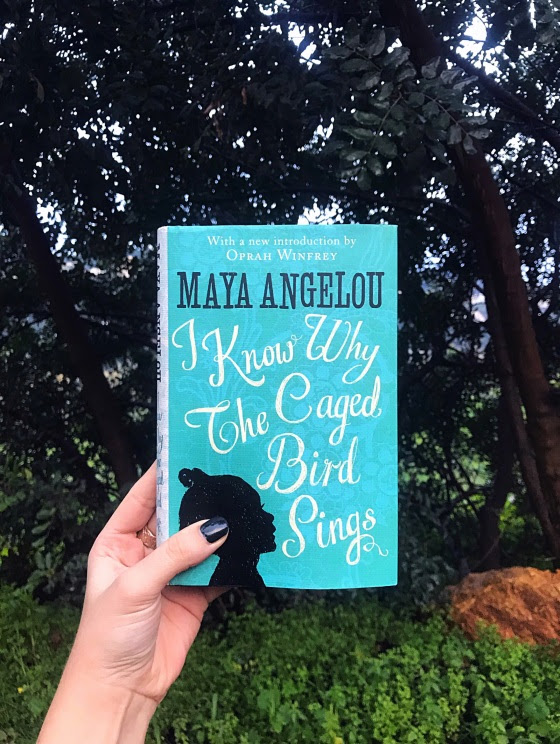
In the poem “Caged Bird”, Angelou perfectly captures the essence of her coming-of-age
autobiographical novel “I Know Why the Caged Bird Sings” where she tackles major
themes including racism, rape, misogyny, family, abandonment, sexuality, childhood,
displacement, religion and more.
Maya (born Marguerite Johnson) brilliantly depicts her “tender years”, ranging from 3 to 16 years old, as she struggles alongside her brother Bailey through the rough patches of life as she learns the definitions of white privilege, discrimination, cruelty and sexual assaults much too soon. Shipped away with a “to whom it may concern” tag on their wrists, the unwanted siblings spend their youth in Stamps, Arkansas under the wing of their religious grandmother and the hand of the “whitefolks”, the (almost) mythical beasts living in the neighboring town.
Throughout her memoire, Angelou reminisces the innocence in
which she believed cruelty and hardship stops at the feet of the “powhitetrash”
and how she had learned to face the world of pain that lies beyond it. The
children are shuffled back and forth between Arkansas, St. Louis and California
where in each phase, they had to learn the different faces of suffering life
throws their way.
I Know Why the Caged Bird Sings is not a book, it’s a human with a story, told
with a raw voice and a heavy heart. Buy the book, take a deep breath and allow
Angelou the sweet revival she most certainly deserves.
Enjoy and always bring a book home. x

 Bring a Book Home